


- Overview
Open Science is an approach to making scientific research, knowledge and data more accessible, transparent, collaborative and reusable. It promotes the sharing of research outputs and data in accordance with principles such as Findable, Accessible, Interoperable and Reusable (FAIR). By encouraging greater openness throughout the research process, Open Science supports research integrity, facilitates knowledge exchange and enables researchers, institutions and communities to collaborate in addressing complex local, regional and global challenges.
At the International Islamic University Malaysia (IIUM), Open Science supports the university’s commitment to advancing impactful and collaborative research. In alignment with Malaysia’s national Open Science agenda and the Malaysia Open Science Platform (MOSP), IIUM seeks to promote responsible research data management, sharing and reuse across disciplines. Through the engagement of researchers, academic staff, students, the Library and other relevant stakeholders, IIUM aims to foster an open and connected research ecosystem that enhances research visibility, encourages collaboration and maximises the value and impact of scholarly knowledge and data.
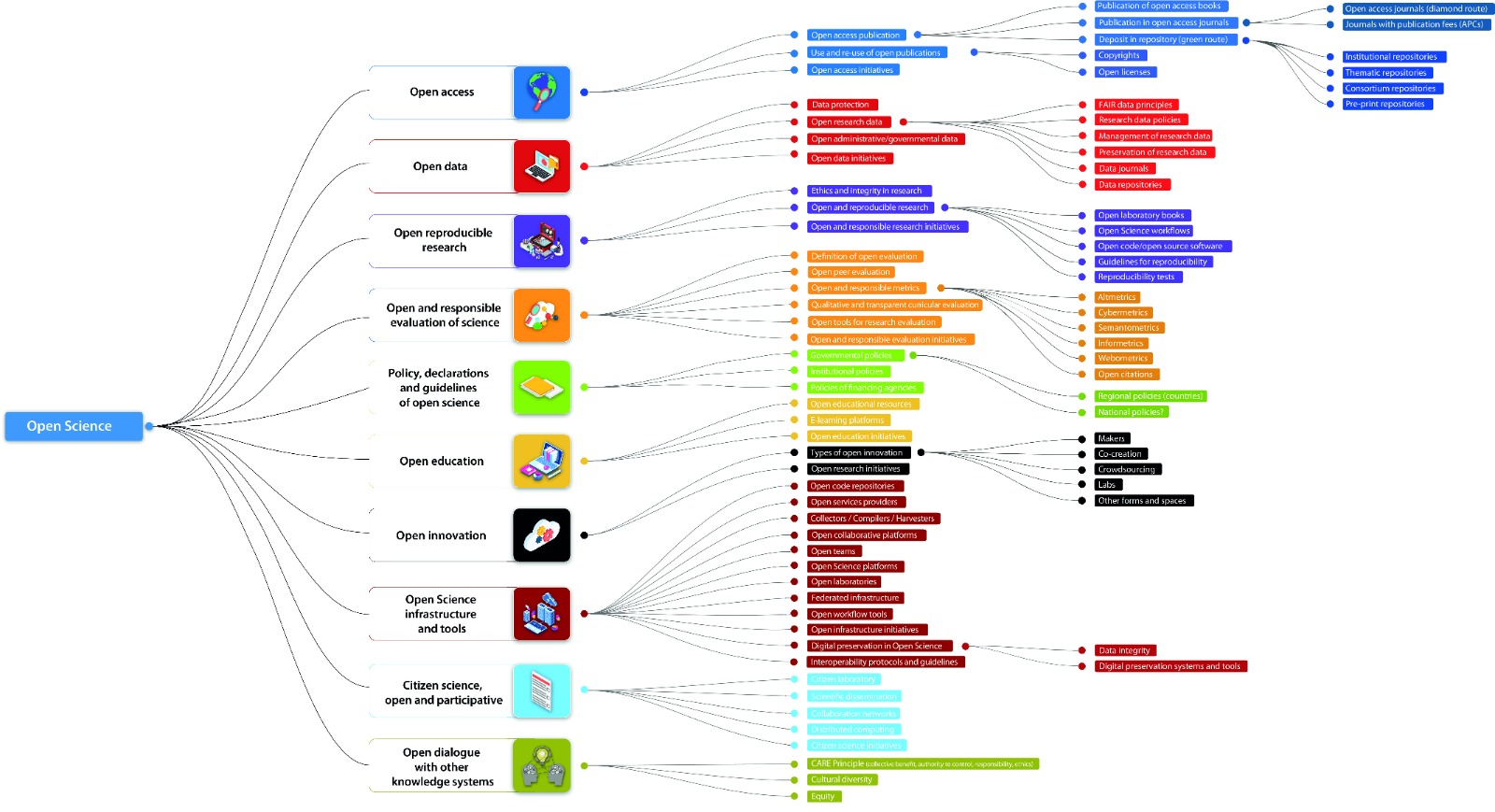
- Open Science Taxonomy
- Reference
Silveira, L. da ., Ribeiro, N. C., Melero, R., Mora-Campos, A., Piraquive-Piraquive, D. F., Uribe-Tirado, A., Sena, P. M. B., Polanco-Cortés, J., Fachin, J., Santillán-Aldana, J., Silva, F. C. C. da ., Araújo, R. F., & Enciso-Betancourt, A. M. (2023). Open Science taxonomy: revised and expanded [Figure]. Zenodo. https://doi.org/10.5281/zenodo.7940641
- Core Principles
- Key Components
- FAIR Data Principles
- Why Open Science Matters?
- Open Science Lifecycle
- How to Practice Open Science?
- Policies & Guidelines
Open Science is guided by four key principles:
|
Open Science covers different areas of research:
|
We promote the FAIR principles to ensure research data is well managed:
|
Open Science helps to:
|
Open practices can be applied throughout the research process:
|
You can start by:
|
Our institution supports Open Science through:
|